How the tunnels work, what buses cost, when to take a taxi, and why walking distances here are longer than the map says.
Walking is the real transport system
Centro is a ravine full of callejones, and most of them are stairs. Wear shoes with grip: the stone is polished and slick after rain. Add about 30 percent to any map estimate, and more if you arrived yesterday — at 2,000 m the first climbs are humbling. The flat exceptions are Paseo de la Presa and Marfil, which is why locals go there to walk; see our running and walking routes guide.
The tunnels, explained
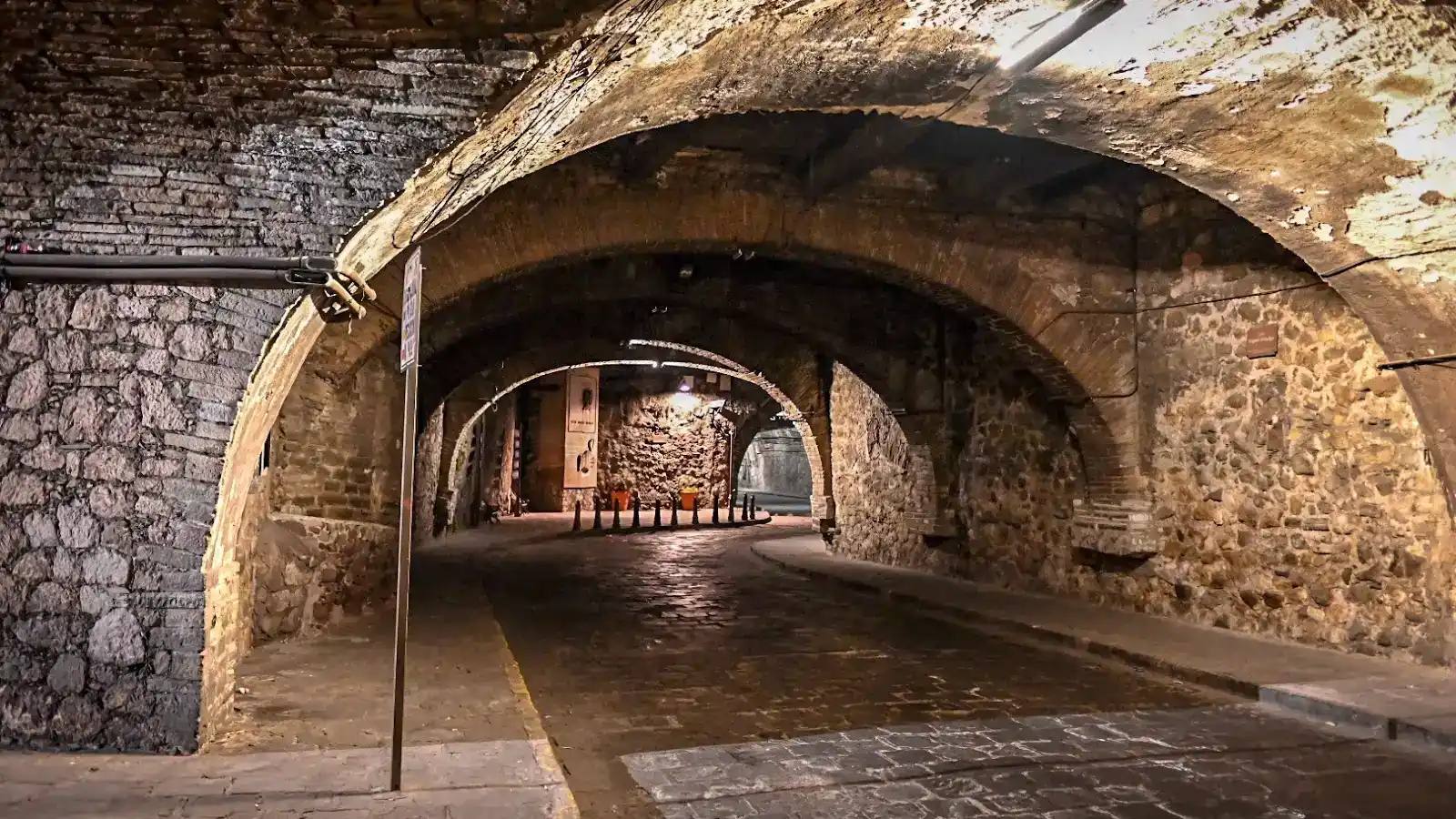
Guanajuato was built over a river. When the river was diverted, its stone channels became roads, and later a network of tunnels was extended under the city. Traffic — cars, taxis and buses — flows through them, so surface streets in Centro stay relatively calm. Two practical points: the tunnels are poorly signed and one-way, so do not attempt them for the first time in the dark, and they are not walking routes. If a driver says they will drop you at a tunnel exit, that exit may be a staircase up to your street.
City buses
Buses cost around 10 MXN, are paid in cash to the driver, and run roughly 6am to 10pm. The useful lines connect the Central de Autobuses, Marfil, the university zone and Centro. Destinations are written on the windshield rather than at the stop, so ask — Centro, Presa, Marfil are the words that matter. They are safe, crowded at rush hour, and considerably faster than they look because they use the tunnels.
Taxis
Taxis are the default for anything after dark, uphill or with luggage. Inside the city a ride is usually 50–80 MXN, up to about 100 MXN for outlying neighborhoods; agree the fare before you set off, as meters are rare. Ranks sit at Jardín Unión, Plaza de la Paz, the mercado and the bus station. Ride-hailing apps work but pickup points in Centro are awkward — a street-hailed taxi is often quicker.
The funicular and the viewpoint
The funicular behind Teatro Juárez climbs to the Pípila viewpoint in two minutes for under 60 MXN return, and it is the single best transport purchase in the city if you would rather not do the staircase. Full detail in our Mirador del Pípila and funicular guide.
Driving and parking
You do not need a car in Guanajuato, and most visitors regret bringing one into Centro. If you drive, park once and leave it: read our parking guide first. Staying in Marfil, San Javier or the Presa makes a car far more workable — those areas are flat and drivable, unlike Centro.
Arriving and leaving
BJX airport is about 40 minutes away, León is closer to an hour, and the Central de Autobuses on the edge of town connects to Mexico City, Querétaro, San Miguel de Allende and León. All of it is covered in our getting to Guanajuato guide. Book an airport taxi through your hotel the night before rather than at 5am on the street.
Frequently asked questions
Do you need a car in Guanajuato Capital? No. The historic centre is walkable and closed-in, taxis cost 50–80 MXN and buses about 10 MXN. A car is only useful if you are staying in Marfil, San Javier or the Presa, or taking day trips.
Can you walk through the tunnels in Guanajuato? No. The tunnels are vehicle roads with narrow or no pedestrian space, poor lighting and one-way traffic. Walk on the surface streets and callejones instead.
How much does a taxi cost in Guanajuato? Usually 50–80 MXN for a trip within the city and up to about 100 MXN for outlying neighborhoods. Meters are rare, so agree the price before you get in.
How do the city buses work? Pay the driver in cash, around 10 MXN, and check the destination written on the windshield. Lines connect the bus station, Marfil, the university area and Centro, running roughly from 6am to 10pm.
Keep exploring
Find local services and transport help, a central place to stay or a guided tour that handles the logistics.
_Photo: Reymundo Sanchez via Google Maps._